Advancing Disability Inclusion Across The WAEMU Region
Ensuring Every Young Person Can Fulfil Their Potential.
Across the WAEMU region, young persons with disabilities are contributing to their communities as entrepreneurs, workers, innovators, and leaders. Yet many continue to encounter barriers that limit access to education, finance, skills development, entrepreneurship, and dignified and fulfilling work. Removing these barriers creates stronger opportunities for individuals, communities, and economies.
For the Mastercard Foundation, disability inclusion (opens in a new tab) is not a separate area of work. We work with Organizations of Persons with Disabilities, governments, employers, and program partners to identify barriers, improve accessibility, strengthen partner capacity, and embed inclusion throughout program design, implementation, budgeting, monitoring, and learning. We are committed to ensuring that young persons with disabilities, especially young women, have equitable access to opportunities to learn, earn, and lead, so they can contribute fully to the economic and social transformation of their communities.
Disability inclusion is essential to advancing equity, reducing poverty, and building stronger economies. By working with young people, Organizations of Persons with Disabilities, program partners, governments, employers, and financial institutions, we can create more inclusive pathways to education, entrepreneurship, and dignified and fulfilling work across the region.
The Challenge In Numbers In The WAEMU Region
Across the WAEMU region, disability is still significantly undercounted, especially in rural communities. While differences between countries may reflect varying levels of poverty, conflict, and access to services, they also point to the need for stronger, more consistent data collection and disability measurement. Better data is essential to understanding the barriers young persons with disabilities face and to designing programs that respond to their realities.
According to the International Labour Organization, across WAEMU countries, approximately 7 to 13 percent of adults aged 15 and above report some level of functional difficulty, while around 2 to 5 percent report a lot of difficulty or are unable to perform any activity.
-
WAEMU Region
In the WAEMU region 42.8 percent of young people with disabilities were not in education, employment, or training in 2022, compared with 21.9 percent of young people without disabilities.
-
Senegal
In Senegal, the gap was particularly significant: 62.6 percent of young people with disabilities were not in education, employment, or training, compared with 33.5 percent of young people without disabilities.
-
Côte d’Ivoire
In Côte d’Ivoire, 29.2 percent of young people with disabilities were not in education, employment, or training in 2022, compared with 20.4 percent of young people without disabilities.
Because disability remains undercounted across the WAEMU region, particularly in rural communities, available data may not fully capture the number of persons with disabilities or the barriers they experience.
Our Inclusion Partners
The Mastercard Foundation works with organizations that bring specialized expertise, strong community networks, and direct knowledge of the realities experienced by persons with disabilities.
The Federation of Associations of Persons with Disabilities in Senegal (FSAPH)
FSAPH represents the collective voice of persons with disabilities and advocates for their full participation in economic and social life.
Through its national and community networks, FSAPH brings lived experience and local expertise into program design and implementation, supports outreach to young persons with disabilities, and helps strengthen advocacy, leadership, and access to economic opportunities.

Light for the World
A disability and development organization and serves as a technical partner to the Mastercard Foundation on disability inclusion under the We Can Work program.
It supports program teams and partners to identify barriers, strengthen inclusive program design and implementation, build technical capacity, and integrate accessibility, reasonable accommodation, budgeting, monitoring, and learning into program delivery.
What Inclusion Looks Like In Practice
-
Inclusive Outreach
Work with Organizations of Persons with Disabilities and community networks to ensure opportunities reach young persons with disabilities.
-
Meaningful Participation
Identify accessibility and reasonable accommodation requirements before activities begin so that participation goes beyond attendance.
-
Inclusive Entrepreneurship and Finance
Review the full participant journey to remove barriers in applications, training, assessments, and access to financial services.
-
Budgeting for Inclusion
Plan and allocate resources for accessibility and reasonable accommodation from the outset rather than responding to barriers afterward.


Perspectives From Our Partners

Fatou Kiné Ndiaye
“Every person has potential within them; it simply needs to be identified early. People with disabilities have abilities and skills despite the barriers they face. Our potential is a source of strength, and with that strength, we will build a society founded on equity and social justice.”
Disability Inclusion Adviser, Senegalese Federation of Associations of Persons with Disabilities (FSAPH)
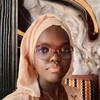
Fatimata Camara
“As a Disability Inclusion Facilitator (DIF), my role is to raise awareness within communities about the rights of people with disabilities, promote inclusion in all areas of life, and fight discrimination. I also support local stakeholders in ensuring that the needs of people with disabilities are taken into account in their projects and policies. My message is simple: believe in yourself and in your abilities. Never let disability define your limits. Nothing about us without us.”
Disability Inclusion Facilitator in Senegal
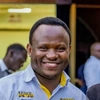
Ambrose Murangira
“At WCW, our value as a technical disability inclusion partner is to help translate the Mastercard Foundation’s commitment to inclusion into practical change across its programs and partnerships. We co-create tools, approaches and solutions with young women and men with disabilities and program partners, ensuring they respond to lived realities and implementation needs. We also strengthen partner capacity and build a growing pool of Disability Inclusion Facilitators who can provide practical, context-specific support. Our goal is to embed disability inclusion in how programs are designed, implemented, budgeted, monitored and continuously improved.”
Senior Expert Disability Inclusion, Light for the World
Stories That Change Perceptions
Behind the data are young persons with disabilities who are building businesses, creating jobs, supporting their communities, and opening new pathways for others. Their experiences demonstrate what becomes possible when education, finance, infrastructure, technology, and professional networks are designed to be accessible to everyone. By sharing these stories, we can challenge misconceptions and highlight their contribution, while also identifying practical approaches that program partners can adapt in their own work. In this way, stories become not only a source of inspiration but also tools for learning and improving program design.
Testimonial from Mame Awa Diop, a participant in the We Can Work program in Senegal
I hold a Master’s degree in Public Law, with a specialization in decentralization law and local government management. I graduated from Gaston Berger University in Saint-Louis.
My educational journey was difficult. As a wheelchair user, accessibility was a major challenge, particularly when it came to accessing classrooms. During my first three years, I attended lectures in an auditorium that was not accessible at all. I had to get out of my wheelchair and crawl. The documentation centre was located on the third floor, and there was no lift.
FSAPH and the We Can Work program supported me greatly through leadership training. They also supported my advocacy efforts to advance inclusion. Of course, we can work. We are just like everyone else. I earned a Master’s degree, and I also know lawyers with disabilities. We are people like anyone else.
Accessibility is the first thing that needs to be improved. When the environment is accessible, we do not feel disabled, and we can carry out our activities without difficulty. Inclusion must be integrated everywhere: into entrepreneurship programs, government programs, and all other areas.
Disability is not an illness. It is something that can give us strength. We can do anything we set our minds to, like go to school, pursue higher education, and find a job. We can do it. We can build an equitable society. Let us believe in ourselves and trust our abilities.
Reaching Rural and Marginalized Communities
Young people with disabilities living in rural communities often face interconnected barriers that limit their ability to access opportunities and participate fully in society. Distance remains a significant challenge, with schools, training centres, healthcare services, financial institutions, and places of work often located far from where they live, making it more difficult to access the resources and support needed to thrive.
Addressing these barriers requires more than extending existing services. It involves designing programs that account for transportation, communication, accessibility, local partnerships, assistive technologies, and the realities of rural livelihoods from the outset.
In Senegal, 28.8 percent of rural households include at least one person with a disability, highlighting the scale of the challenge in rural communities. Poor transportation, weak connectivity, inaccessible information, and limited access to assistive products further deepen exclusion, particularly for young women, low-income households, and communities affected by conflict or fragility.
This is particularly important for agriculture, rural development, and economic opportunity programs seeking to reach young people where they live and work.
Removing Barriers to Rural Livelihoods: Discover Mama Sabaly’s Story
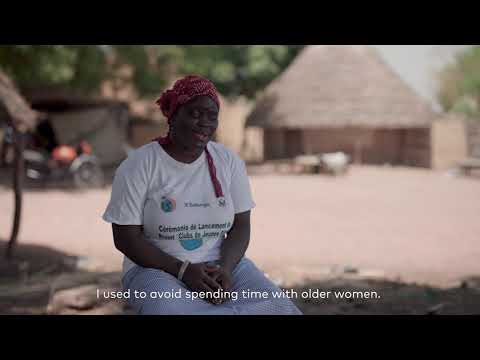
Mama Sabaly learned to make soap through Batonga's women's circle. She now produces and sells her own products, earns her own income, and teaches other women in her group.
We Can Work Africa Platform
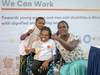
Explore additional tools, resources, and insights designed to advance the economic inclusion of young persons with disabilities across Africa.
-
Inclusive Communications Guide
Read the inclusive communications guidePractical guidance for developing content and communications that are accessible, respectful, and representative of persons with disabilities.
-
Inclusive Program Design and Implementation
Read about inclusive program design and implementationTools and guidance to help program teams identify barriers across recruitment, training, entrepreneurship support, access to finance, digital programs, and other program activities.
-
Budgeting for Inclusion
Read more about budgeting for inclusionGuidance to help program teams identify and budget for accessibility, reasonable accommodation, accessible communication, and specialized technical support.
Accessibility Statement
We are committed to making this page and its resources accessible. Videos include captions, downloadable documents are designed for accessibility, and we welcome feedback to help us continue improving the accessibility of our digital content.
Learn More About Our Work in WAEMU
Addressing the challenge of employment is a driver for the socio-economic development of the WAEMU region.