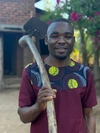
Maclane Natukunda
Young Farmers in Uganda Are Enabling Access To Land, Finance, And Markets For Themselves And Their Peers
Through collective action, young farmers are strengthening their access to land, finance, and markets—and building more responsive agricultural systems.
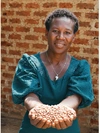
“Our future as young people is ours to shape. Once you begin to understand that, everything about how you engage with your environment changes,” says Yulita Nafuna, Chairperson of the 45-member Tuhamuke United Women’s Group in Kiryandongo District.
Yulita was one of the young people reached through the Markets for Youth Program, implemented by GOAL Uganda in partnership with the Mastercard Foundation under the Young Africa Works strategy. The program, which has since been redesigned and scaled, was designed to help rural young women and men access dignified and fulfilling work in agriculture by strengthening the systems around them. Rather than creating parallel structures, it worked with financial institutions, market actors, service providers, and local government to make existing systems more responsive to young people.
For Yulita, that realization grew through repeated community conversations. The women attended meetings, asked questions, followed up, and made their priorities visible. Over time, their savings group became a more structured platform for planning, sharing information, and pursuing income-generating opportunities together.
Their experience reflects a wider shift among rural young people in Uganda. In agriculture, access to opportunity is often constrained by family land arrangements, collateral requirements, uncertain markets, and limited influence over local decisions. Yet organized young people are increasingly engaging these systems as contributors who can identify solutions, negotiate access, and hold institutions accountable.Their experience reflects a wider shift among rural young people in Uganda. In agriculture, access to opportunity is often constrained by family land arrangements, collateral requirements, uncertain markets, and limited influence over local decisions. Yet organized young people are increasingly engaging these systems as contributors who can identify solutions, negotiate access, and hold institutions accountable.

Working Through Systems
Through the Markets for Youth Program, skills development, financial services, market linkages, Community Conversations, and youth-led research created connected pathways to opportunity. More than 406,000 young people were reached, and over 362,700 completed training and applied new skills in their livelihoods.
The Community Conversations were especially important. Led by trained youth champions, they brought young people together with local leaders, financial institutions, and market actors in sustained cycles of dialogue. Familiarity grew into accountability, and participation began to translate into influence.
“It is the consistency that makes the difference,” says Maclane Natukunda, Chairperson of the Katibani Youth Farmers Group in Kamwenge District. “You come back, you ask, you follow up. When people see that you are serious, they respond differently.”
From Participation to Influence
For Yulita’s group, greater voice led to more deliberate household and business planning. “At first, it was about helping each other manage small challenges,” she says. “Then we began to ask what we could build together, not just what we needed in the moment.”
For Maclane’s group, influence became visible in production and market participation. Facilitated linkages connected members with the National Agricultural Research Organisation and Equity Bank Uganda. With technical support, quality inputs, and a UGX 5 million loan, the group moved from informal saving into certified seed production.
Young people are also taking their priorities into sub-county and district planning and budget consultations. They are raising issues including access to land, inputs, market infrastructure, and government programs. These exchanges are helping decision-makers see young people not only as program participants, but as partners in local economic development.
Building Credibility Through Results
In one season, Maclane’s group produced 10 tonnes of beans. The harvest represented more than volume: it gave members greater control over how they produced, where they sold, and how they approached buyers and institutions.
“Before, we were just trying to farm and struggling to be taken seriously,” Maclane says. “Now we are recognized as producers who can supply large quantities. Buyers, financial institutions, and local leaders can see the results of our work.”and local leaders can see the results of our work.”
Progress That Extends Beyond Individuals
Across the program, more than 333,000 young people were earning an income by its close. Youth groups accessed over UGX 16 billion in financial services, while their participation in community decision-making increased. These outcomes show how skills, finance, markets, and voice reinforce one another when young people are organized and institutions listen.
Deus Muhwezi, Director of Agricultural Services at Uganda’s Ministry of Agriculture, Animal Industry and Fisheries, recognized the program’s contribution to strengthening agricultural market systems and supporting young Ugandans to pursue dignified and fulfilling work.

A Foundation for What Comes Next
Although the Markets for Youth Program has closed, its contribution remains visible in stronger relationships, more capable youth groups, and changed expectations. Young people have seen that consistent engagement can open doors—and that collective voice can influence how services and opportunities are designed.
For Yulita and Maclane, the next chapter is rooted in confidence, organization, and proof that systems can respond. “We are not just waiting,” Yulita says. “We are organizing, saving, planning, and actively looking for opportunities.”
Markets for Youth Program
Learn about the program and how it is supporting market systems development to enable rural young women and men to access dignified and fulfilling work across Uganda.


Ibukunoluwa Omotola - Turning Barriers Into Bridges for Young People with Disabilities
Nigeria
A Personal Revolution: How Irene Found Her Voice and Identity at EARTH University
Costa Rica
From Kakuma Refugee Camp to the World Health Organization: Kuol Maper Alier’s Journey of Resilience and Global Health Innovation
South Sudan, Kenya
Five Reasons Why Kuradusenge Teaches
Rwanda
Doreck Ankunda on Disability Inclusion and Finding Your Voice When the World Doesn’t Want to Listen
Uganda