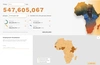
Africa Youth Employment Clock
Created to support and inform the journey to more inclusive African labour markets.
Status
active
Period
Ongoing
World Data Lab (WDL), in partnership with the Mastercard Foundation launched the Africa Youth Employment Clock on 19 March, 2024.
According to WDL projections, Africa will experience its highest-ever youth population growth in this decade (2021–2030), with the population projected to increase by almost 100 million between 2023 and 2030. Against this backdrop, enabling young people in Africa to access dignified and fulfilling work is more important than ever before. A collective, renewed impetus underpinned by credible data is needed to achieve this.
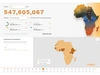
The Africa Youth Employment Clock will support and inform the journey to more inclusive African labour markets through cutting-edge data modelling and visualization. This labour market model monitors real-time job growth and forecasts employment trends in Africa; disaggregated by key variables such as employment status, age, gender, and sector, up to 2030. The first of its kind, the Clock is poised to become a go-to place for comprehensive youth employment data in Africa. It is intended to inform the strategic decision-making of policymakers, development actors, and other youth and labour ecosystem stakeholders. The Clock draws from surveys and datasets made available by national statistics offices, the International Labour Organization (ILO), and the International Institute for Applied Systems Analysis (IIASA).
The Clock is a user-friendly, publicly available digital tool which can be accessed at africayouthjobs.io. Country-level youth employment data is available for all 54 African states, while sub-national data is currently available for Kenya and Rwanda. Over time, access to sub-national data will expand to include Ghana, Nigeria, Uganda, Senegal, and Ethiopia, countries where the Mastercard Foundation supports country-based programs. The Clock’s data analytical model draws from surveys and datasets made available by national statistics offices and international sources. WDL’s methodology is peer-reviewed and enables consistent, comparable data across countries.
Experience the Africa Youth Employment Clock
First-of-its-kind tool to monitor youth job growth and forecast youth employment trends.