Vasco Hamisi
From Refugee to Renewable Energy Leader: Vasco’s Journey in Kakuma

When Vasco fled the Democratic Republic of Congo to Kakuma Refugee Camp in 2010, he carried his dreams with him.
Displaced and feeling uncertain about the future, his primary focus was staying alive. He says life in the camp was tough. There were days when hunger and despair nearly overwhelmed him. But through volunteering, learning new skills, and receiving mentorship, Vasco started to rebuild himself.
What he didn’t realize then was that one day, his voice and those of other young people around him would inspire change for an entire community.

“I didn’t come to Kakuma as a leader. I came as a young man searching for peace. But I found resilience, buried in the hearts of young people quietly burning in the shadows.”
He says life in the camp was tough. There were days when hunger and despair nearly overwhelmed him. But through volunteering, learning new skills, and receiving mentorship, Vasco started to rebuild himself.
His experiences living in Kakuma and seeing first-hand the challenges of daily life in a refugee community, led him to co-found Okapi Green Energy Limited, a company led by refugees that aims to bring affordable and reliable solar power to people in Kakuma who cannot afford electricity.

Under Vasco’s leadership, Okapi Green Energy has delivered solar power to more than 200 homes and businesses in Kakuma. The impact has been significant. Children can now do their homework after dark, women can cook safely, and small businesses can keep food fresh and increase their income.
“Electricity was something I often took for granted before I became a refugee,” Vasco says. “In Kakuma, I saw the struggle: children doing homework under candlelight, women cooking in unsafe conditions, and businesses struggling to keep food fresh. I knew we could do better.”

In 2023, with support from the Mastercard Foundation, Vasco launched a solar vocational training program for refugee youth, focusing on young women and men who are often excluded from technical and employability training. By 2026, the program had trained more than 215 young women in solar installation and maintenance, creating pathways into a sector where women have traditionally been underrepresented.
Reflecting on the broader impact of the initiative, Vasco explains that the program is about more than just technical instruction. “We’re not just giving them skills,” Vasco says. “We’re giving them identity, purpose, and power.”
The impact is already being felt across the community. More than 95 trainees have gone on to create job opportunities in the energy sector, while Okapi Green Energy now employs more than 20 young people, demonstrating how refugee-led enterprises can create both livelihoods and local solutions.
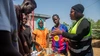
Besides providing energy, Okapi Green provides mentorship and training sessions to encourage youth empowerment and reduce the stigma around refugee identities.
Vasco often speaks at youth forums, encouraging others not to wait for perfect conditions to make a difference.
Vasco’s story exemplifies what happens when young people are given a chance to lead. For him, Okapi Green Energy isn’t just a business; it’s a legacy. A torch passed from one to another, illuminating the path for young people to shape the futures they deserve.

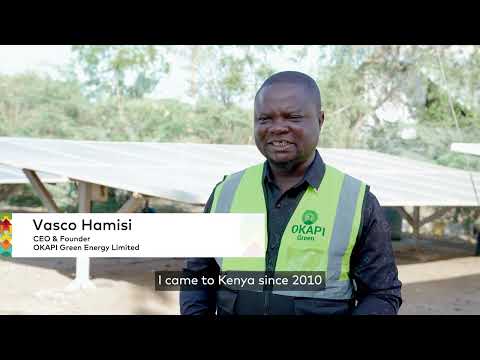
Watch: Vasco's story

He Opened the First Gym in Ethiopia’s Kebribeyah Camp, Offering a Space Away From Drugs
Ethiopia
From Despair to a Thriving Confectionery Business
Uganda
Transforming Post-Secondary Education
Canada
Transition to Work and Meaningful Livelihoods
Canada
Mastercard Foundation Scholar, Lloyd Teta, Reflects on Four Years at Ashesi University
Ghana