Rehema Mgova
Her Farm, Our Future: How Rehema is Growing a Sustainable Tomorrow
This story was first published on March 26, 2026, on the One Acre Fund website (opens in a new tab).
With the right support, women farmers are improving their livelihoods. For Rehema Mgova, integrating trees into her farm has improved soil health, unlocked new income streams, and built resilience against climate shocks.
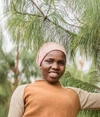
It is early morning in Tanzania’s Kilolo District, and the sun has just risen over 31-year-old Rehema Mgova’s home. Rehema is already hard at work, moving deliberately through the 3 acres she farms on. Her hands tend to maize, peas, potatoes, and beans. As she moves through her field, she also sees something that, in recent years, has become very important to her: the nearly 300 trees that stand across her farm. These trees are supporting her farm’s soil health, diversifying her income, and shaping the dreams she carries for her family.
“I was motivated to take trees after the One Acre Fund Field Officer told me that I could earn money by taking care of the trees.”
Rehema began her tree planting journey with a mix of pine, Grevillea, Casuarina, Albizia, and apple trees. In later seasons, she returned to purchase avocado trees and enrolled in our carbon-credit program. She did not initially plan to plant any more trees after her first year due to a lack of space on her farm. Trees take years to mature and so would compete for room on her land against seasonal food crops. However, in 2025, she was able to purchase more land and expand her farm.
Nurturing the Soil and Her Livelihood
As Rehema works the farm, she takes shelter under the shade of one of the tallest pines. “Under the tree, now the soil color has started turning black. It is very different from the reddish color it had when I was first planting the trees. I believe this is possible because of the leaves that fall below the tree and add nutrients to the soil,” Rehema says.
Since planting the trees, Rehema has also noticed that the soil holds together more firmly. “I feel that they [the trees] have been helpful in reducing soil erosion,” Rehema says.
With improved soil health, Rehema has already begun to see a difference in her harvest.
"This season I harvested 1,900 big maize cobs in the first round that I sold at Tsh 298,000 (USD 115) and bought couches. In the second round, I got 2,200 slightly smaller maize cobs and sold them at Tsh 130,000 (USD 50) and bought farm supplies."
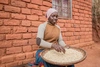
Rehama Mgova
New Income Streams
The fruit trees Rehema plants alongside her staple crops have created additional sources of income and provide her children with fresh, nutritious food, making their meals healthier and more varied. In 2022, Rehema received apple seedlings and has since harvested apples from the surviving tree for two seasons now.
“The first season I had around 10 fruits, the next around 40. These were just for my family. Soon, I plan to sell and use the money to invest in my children’s education and my farming.”
Selling her surplus fruit locally will contribute to her community’s access to healthy, diverse food.
At the same time, Rehema participates in a carbon program that compensates farmers for planting and maintaining trees that will, with time, capture carbon. At this stage, as her trees grow, Rehema receives survival payments as a financial incentive for keeping them alive and growing.
“I remember receiving my first survival payment while at the market. The mobile money came at the perfect time, and I used it to buy household items.” Rehema says.
For the trees Rehema planted in 2022, she receives an annual survival payment of Tsh 450 per tree, averaging about $17 USD per 100 trees. In 2025, she used the payment to join a local savings-and-loan group. She has also used some of the payments throughout the years to pay casual laborers when she needs extra support with weeding or harvesting on her farm.
As her newer trees continue to grow, she expects to receive payments over the next three years, followed by carbon payments in the decades to come if all goes well.
Inspiring Change
“Being among the first adopters of planting trees for the carbon program, I am an ambassador and an inspiration to other farmers to plant trees,” Rehema says.
Her neighbors come to her farm to see her crops, the healthy soil, and the trees that line her farm. Through these visits, they learn firsthand how careful farming, diversification, and environmental stewardship can also improve their livelihoods.
Women like Rehema make up a large percentage of Africa’s farmers, and when they succeed, the benefits ripple out. Healthier farms mean stronger harvests, more food security, and more stable incomes. For farm families, those stronger harvests then mean better nutrition, children in school since parents can afford school fees, and households building resilience against unpredictable weather and market fluctuations.
We are grateful that in partnership with the Mastercard Foundation, we are able to invest even more in young people in nine of the countries where we operate to access interventions, like those Rehema has used to build her farm. Rehema’s story highlights the impact that access to agricultural programs such tree seedling distribution, soil improving products, and carbon payment systems can have. It also reminds us of the ripple benefits of supporting women, especially during the UN’s International Year of the Woman Farmer.
Growing Resilience through Climate-Action and Youth-Empowerment (GRACE)
One Acre Fund is an agricultural service provider that supports Africa’s smallholder farmers in building resilient communities.

Using One’s Voice to Question, Empower and Inspire
Cameroon
Empowering women to use their voices
Rwanda, South Sudan, Kenya, Uganda
Making a Difference in Benin’s Ministry of Economy and Finance
Benin
Turning Research into Solutions: What I Learned as a Youth Think Tank Researcher
Kenya
The Journey So Far And What's Next: Ndyabawe Myres
Uganda