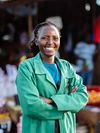
Christine Ng’ang’a, Co-Founder of Soko Kijiji
Soko Kijiji: Rebuilding the Village Market for the Digital Age

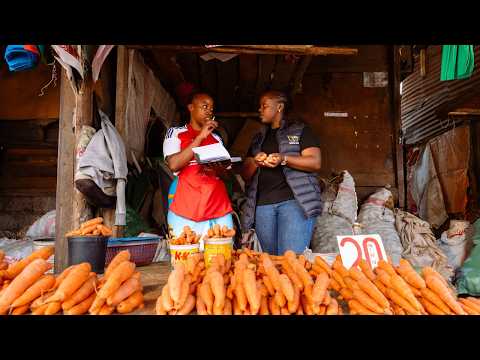
Every morning before sunrise, Nairobi’s open-air markets begin to stir as women traders arrange fresh vegetables that will feed households, sustain farms, and keep the local economy moving. Yet the system behind each sale has long been fragmented, unpredictable, and largely invisible to the digital economy.
Soko Kijiji, which translates loosely as “village market,” was launched in 2020 to change how this system works. Built as an e-commerce and supply chain platform, it links informal market traders, customers, and farmers through a system designed for trust, efficiency, and inclusion, transforming informal food trade into a visible and commercially viable sector where women traders are both key drivers and beneficiaries.

That same year, the COVID-19 pandemic disrupted movement, market access, and household incomes across Kenya. Open-air markets, where women traders known locally as "mama mboga" sell vegetables, fruits, and household staples, were hit especially hard. Lockdowns and curfews limited trading hours, while broken supply chains meant produce was frequently wasted before reaching markets, even as urban consumers struggled to access fresh food.
“When COVID shut down the markets, everything we had built collapsed overnight. The women who supplied us were stranded, and families had no income. We asked ourselves, ‘How do we keep trade alive when markets are closed?’” recalls Christine Ng’ang’a, Co-Founder of Soko Kijiji.
For traders like 25-year-old Ciru, that question was deeply personal. After losing her job in a salon during the pandemic, she turned to selling vegetables in Nairobi's open-air markets, but the business was little more than a way to get through each day.
“I was just doing business for the sake of it. I would come in the morning, sell, and go home in the evening. There was no profit, no plan, just survival. Until I was introduced to DigiMama” Ciru recalls.

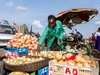
DigiMama is Soko Kijiji’s end-to-end digital platform developed in partnership with the Mastercard Foundation to equip mama mbogas with mobile tools to source, trade, and distribute produce. Designed around how informal markets work, the platform helps farmers gain market information and direct access to buyers. Traders can order produce, manage transactions, and build digital records. Suppliers gain greater visibility into demand, helping to reduce waste across the supply chain.
Through the DigiMama platform, Ciru saw her stall grow into a business she could plan, track, and grow.
Today, Soko Kijiji connects more than 1,500 farmers and suppliers with a network of more than 3,000 mama mbogas, moving over 1,000 metric tons of fruit and vegetables every month through eight distribution hubs across Nairobi and Mombasa. This scale is not incidental. It is the operational backbone that allows Soko Kijiji to aggregate demand and supply, support fairer pricing, reduce waste, and bring consistency to a sector long defined by unpredictability.
The company operates across three interlocking lines of work: e-commerce, which aggregates demand and supply for everyday essentials; market logistics, which moves goods faster and more affordably from markets to consumers; and commodity trading, which digitizes informal trade and opens new revenue streams through online marketplaces.
Impact on women in the open-air markets

For more than 3,000 women in Soko Kijiji’s mama mboga network, digitization means more reliable sourcing, transparent pricing, stronger business records, and transaction histories that can open pathways to formal financial services that have long been out of reach for many informal traders. As women build stronger businesses, they are also strengthening household incomes and creating greater financial stability for their families. The impact extends beyond individual traders. Farmers benefit from more predictable demand and fairer market access. Consumers have more reliable access to fresh produce. Young people are creating livelihoods as digital ambassadors, helping traders navigate new technologies while building leadership and entrepreneurship skills of their own. At the same time, women traders are becoming better organized through Community-Based Organizations, strengthening their collective voice and increasing their ability to engage with formal financial institutions.
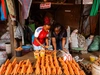
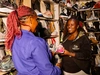
For Christine, this is where the real transformation lies. "When traders formalize, they stop being fragile. Fires, market closures and sudden shocks no longer destroy everything they've built. With records, digital sales and new buyer networks, they can recover and keep growing. Our traders are no longer invisible. They attract contracts from bigger buyers, they employ riders, and they even train others. What began as informal hustling has become organized entrepreneurship."
Watch the short film about Soko Kijiji

A Passion for Agriculture
Ghana
Scholars' Voices: The Elephant in the Room
South Sudan, Kenya
Disability Inclusion Advocate Gashaw Tesfaw Redefines Education and Leadership in Ethiopia
Ethiopia
Her Farm, Our Future: How Rehema is Growing a Sustainable Tomorrow
Tanzania
Lilian Amponsaa Boateng's Educational Journey
Ghana