“I had reached a point where I believed my education journey had ended,” says Sifa Mwavita, a mother of three who fled the Democratic Republic of Congo and now lives in the Kyangwali Refugee Settlement in western Uganda. After leaving school, getting married, and having children, it was hard for her to see a way back. Education felt like something that belonged to an earlier chapter of her life.
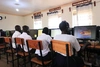
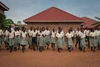
Learners engage in digital learning activities as part of the Bridge programme's efforts to equip young people with skills for education, work, and entrepreneurship.
“I kept asking myself if I would even fit in again,” she explains. “But I also knew that if I did not try, I would always wonder what could have been.”
For many young refugees in Uganda, this feeling is familiar. Interrupted education is not only about missed years of schooling—it is about confidence and belonging. Conflict, displacement, poverty, early parenthood, and economic pressure have disrupted education for thousands of young people across Uganda’s refugee‑hosting districts, leaving many unsure how—or whether—they can return.
Second‑chance education pathways are helping to change that reality.
Education That Adapts to Real Lives
While second‑chance education models were initially adopted to support displaced learners whose education had been interrupted by crisis, the need for flexible pathways quickly extended beyond displacement alone. Interrupted learning is now recognized as a wider national challenge affecting both refugee and host communities.
The Accelerated Education Program (AEP), implemented under the Bridge: From Secondary Education and Skills Development to Job Opportunities for Refugee and Host Community Youth in Uganda program, was designed in response. The program compresses the formal lower secondary education curriculum from four years into two, enabling learners who have been out of school to recover lost time and re‑engage with education in a structured but flexible way.
For Sifa, this flexibility made returning possible. Through the AEP, she resumed her studies, sat for her Uganda Certificate of Education examinations, and qualified for Advanced Level Secondary Education. She went on to complete the Uganda Advanced Certificate of Education and now works as a teaching assistant.
“Passing my exams showed me that my journey had not ended,” she says. “It gave me the confidence to continue with my education and to start thinking again about the kind of future I want for myself and my children.”

Sifa Mwavita, an Accelerated Education Program graduate and teaching assistant, returned to school after years of interrupted learning and is now helping shape the futures of other young people.
Across 34 AEP centres in nine refugee‑hosting districts, more than 10,000 learners have enrolled, many of them young refugees and young women navigating complex life circumstances. In 2024, 96 percent of AEP learners qualified for Advanced Level Secondary Education.
Returning to School Begins in the Community
For many young people, especially young mothers, the most significant barriers are not only access or affordability, but confidence. Time away from school, combined with responsibility, stigma, and uncertainty, can create a sense that education no longer belongs to them.
Jeane Mukhisa, a mother of four and a member of the Tumaini Mother‑to‑Mother group, understands this well. Alongside other women—many of whom left school early and are raising children—she works to identify out‑of‑school young people, support young mothers in returning to education, and help them balance learning and family responsibilities.
“We have lived this,” she says. “So, when someone says they cannot go back, we understand what they mean. It is not just about school. It is about fear, about shame, about wondering if you still belong.”
The group’s work is built around sustained psychosocial support. Members spend time listening, mediating family concerns, and supporting practical arrangements such as childcare. Just as importantly, they help shift how returning to school is understood—from a rigid, time‑bound expectation to something that can be paused, resumed, and rebuilt.

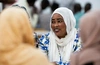
Jeane Mukhisa (foreground) works with the Tumaini Mother-to-Mother Group to support young mothers and other out-of-school youth to return to learning and succeed.
“We do not just tell someone to go back to school and then leave them alone,” Jeanne says. “We stay with them. We check on them. We support them until they feel strong enough to continue on their own.”
This sustained support is contributing to increased enrolment and improved learner performance in the settlement. More significantly, it is reshaping perceptions of education itself, reinforcing that interrupted learning does not have to mean permanent exclusion.
Linking Education to Economic Opportunity
For many young refugees, returning to school must lead somewhere tangible. Education is not pursued in isolation from economic realities, especially for those supporting families or rebuilding livelihoods after displacement.
“For me, it is important that going back to school leads to something real,” Sifa explains. “I have children to take care of, so I cannot just study without knowing what comes next.”
The AEP is designed with this reality in mind. Through the broader Bridge model, accelerated education is connected to work readiness training, entrepreneurship development, and access to finance. Since its inception, the program has reached more than 60,000 young people, with over 15,000 transitioning into work.
By aligning second‑chance education with skills development and employment pathways, the model supports learners not only to return to school, but to move forward into more stable and productive futures.
Systems Change: From Local Practice to National Pathways
What is happening at the community level is also informing change at a broader scale. Through collaboration between War Child Canada, the Ministry of Education and Sports, the Mastercard Foundation, and consortium partners, lessons from the AEP are contributing to Uganda’s efforts to formalize accelerated education as a recognized national pathway.
National guidelines and curriculum work are giving accelerated education a formal structure within Uganda’s education system, enabling learners who dropped out to complete lower secondary education and progress to Advanced Level or vocational pathways.
For learners like Sifa, the impact is deeply personal. Returning to education has opened doors she once believed were closed—restoring confidence, expanding opportunity, and creating a more stable foundation for her family’s future.
Across Uganda, second‑chance education is doing more than helping young people return to school. It is helping them reclaim possibility, rebuild momentum, and move forward with dignity.
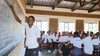
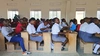
An AEP learner participates in a classroom lesson, demonstrating the confidence and skills young people gain through flexible education pathways.
Learn More About Our Work In Uganda
In 2019, the Foundation launched the Young Africa Works strategy in Uganda to enable 4.3 million young people between the ages of 18 and 35 (70 percent women, seven percent refugees, and three percent young people with disabilities) to access dignified and fulfilling work by 2030.