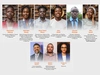
Three Refugee Youth Leaders Driving Inclusion and Policy Change
Across three different fields, three young people navigating displacement are building businesses, strengthening communities, and driving change in their respective contexts. This World Refugee Day, we asked them what fuels their work, and what policies and systems need to shift to unlock greater opportunity for refugee and displaced youth.
HEALTH PRACTITIONER
Louange Koffi
I would like policymakers and humanitarian actors to meaningfully include refugees and displaced people in decision-making processes – and invest in sustainable access to education, healthcare, and economic opportunities that allow them to thrive and contribute to their communities.
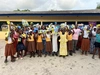
Growing up as a refugee in Ghana, Louange Koffi witnessed firsthand the barriers displaced people face in accessing education, healthcare, and opportunity – particularly women and girls. Those experiences shaped a clear direction: dedicate her work to the well-being and empowerment of the communities she came from.
Louange is a Togolese refugee, registered nurse, and public health practitioner currently finishing her Master’s in public health in France. She works at the intersection of health equity, refugee inclusion, and the rights of women and girls.
As founder of The Ange Aide Foundation, she has supported over 1,000 girls with sexual and reproductive health education and provided mentorship to more than 200 refugee and vulnerable girls in Ghana. She also advocates for policies that expand access to health, education, and livelihoods for displaced communities through global platforms, including the Refugee Education Council.
"I would like policymakers and humanitarian actors to meaningfully include refugees and displaced people in decision-making processes – and invest in sustainable access to education, healthcare, and economic opportunities that allow them to thrive and contribute to their communities."
In addition to founding The Ange Aide Foundation, Louange has served as a Youth Advisor to the Mastercard Foundation, the World Bank, and others on refugee and youth inclusion, bringing the perspective of displaced communities directly into global policy spaces.
ENTREPRENEUR
Esther Kitumaini
I would like policymakers and development partners to prioritize investment in nutrition, especially during the first 1,000 days of life. Nutrition is the foundation of human development, education, productivity, and economic growth.
Four years ago, Esther lost her young nephew to malnutrition in Rwamwanja Refugee Settlement in Uganda. That loss became a mandate: no child should lose their future to something preventable.
The first two years are considered to be the most important in a child’s development, and nutrition plays a key role in this. Yet this window remains chronically underfunded and overlooked, especially in refugee and displaced communities.
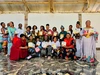
Esther co-founded her social enterprise, AfiaNest, to change that. In under 18 months, it has produced and distributed over two tons of nutritious food products, nourished more than 3,250 children across Uganda, and trained 20 refugee mothers in Wakiso District, providing nutrition education, as well as income earning opportunities funded directly by the enterprise's own profits.
AfiaNest's work is rooted in a simple conviction: when mothers and caregivers have the knowledge and tools they need, children and communities thrive.
"I would like policymakers and development partners to prioritize investment in nutrition, especially during the first 1,000 days of life. Nutrition is the foundation of human development, education, productivity, and economic growth."
In addition to founding AfiaNest, Esther is the Secretary General of the Amahoro United Alumni Network, an Amahoro Coalition Fellow, and a UNICEF U-Reporter advocate for refugee youth.
SPORTS MENTOR
Lich Gatkoi Puok
I would like policymakers and development partners to invest more directly in refugee-led initiatives. Local leaders understand the realities, needs, and strengths of their communities – yet they often have limited access to funding and decision-making spaces. Image from UNHCR
Growing up in Kakuma Refugee Camp in Kenya, Lich Gatkoi Puok watched talented young people lose hope simply because opportunity never reached them. Basketball had been a source of change in his own life, and he was sure it could do the same for others.
Lich is a South Sudanese refugee, journalist, and social entrepreneur based in Kakuma. He works at the intersection of sports, storytelling, and youth empowerment – using them as tools for opportunity and social change.
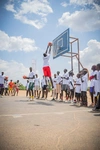
As founder of the Refugee Basketball Initiative (RBI), Lich has reached over 5,000 refugee and host community youth through mentorship, life-skills training, and leadership development. More than 370 young people have been trained in basketball, 34 have accessed educational scholarships through sport, and two have earned scholarships to study in the United States. RBI has also created employment for 10 young people – eight refugees and two host community members – and actively expanded leadership and sports opportunities for girls and young women. Through tournaments, clinics, and mentorship programs, RBI continues to strengthen social cohesion between refugee and host communities.
"I would like policymakers and development partners to invest more directly in refugee-led initiatives. Local leaders understand the realities, needs, and strengths of their communities – yet they often have limited access to funding and decision-making spaces."
Alongside RBI, Lich reports for SIKIKA, a community radio initiative supported by German broadcaster DW, amplifying stories of displacement, resilience, and youth leadership that rarely reach mainstream audiences.
World Refugee Day
This World Refugee Day, we celebrate the contributions and talent of refugees and displaced youth across the continent.