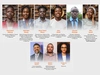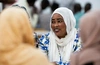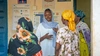
In Kakuma and Dadaab, three young refugee women are using work, care and lived experience to build pathways for themselves and others.
There is a certain kind of ambition that does not announce itself loudly.
It shows up in a welding workshop in Kakuma, where a young woman works with fire and steel so her siblings can stay in school.
It shows up in community rehabilitation work, where a Sudanese refugee trained in physiotherapy helps people affected by displacement regain movement and independence.
And it shows up on a farm in Dadaab, where a woman farmer finds community in harvesting larvae, tending poultry and growing food.
For Mariam, Pang and Monica, rebuilding has meant finding work, learning skills, caring for family, building income and imagining futures beyond survival.
Mariam: Defying The Odds Through Welding
Mariam Suleiman came to Kenya from the Democratic Republic of the Congo in 2017, after insecurity made life at home unsafe.
The family arrived in Kakuma with little. Her mother looked for work and took her children to school. Then, in 2019, she died after developing asthma.
“My mom was a fighter,” Mariam says. “She really tried herself to raise five kids, took us to school, provide everything for us. It wasn’t easy, but she managed.”
Mariam was about 18 when her mother died. As the eldest child, she was still young, grieving and trying to understand how to keep the family moving.
“Everything I have to do, I have to think about my siblings,” she says. “When I look at my siblings, I told myself I have to fight so that they can live at least comfortable in Kakuma.”
She began looking for any work that could bring in income. One day, while looking for a job, she saw a man welding.
“I didn’t look for welding,” she says. “I was actually looking for any work or any kind of job that can provide me income.”
The man asked if she knew how to weld. She did not. She had never seen a woman welding before, and the work seemed intimidating. Then she saw the possibility in it.
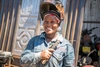
Mariam Sulaiman, in Kakuma, Kenya. Photo credit: ©UNHCR/Eric Bakuli
“I said, wait, I have never seen a woman doing welding, why not?” Mariam says. “Then I said, yes, I can do welding if you teach me.”
Within a few weeks, Mariam was able to weld a frame and fabricate a door on her own.
The skill became a turning point. It helped her earn, care for her siblings and later opened the door to a scholarship in welding and fabrication in Nairobi, where she began to see the field differently.
It also gave her a way to push against the limits other people placed on her.
“Most men, they don’t believe women can do hard work like welding and fabrication,” she says. “They always told me, you can’t do this, you can’t manage. I have to tell them, just believe me and I can show you what I can do.”
Today, Mariam works in welding and fabrication, helps run a workshop and trains young people in Kakuma. The workshop produces gates, doors, windows, fences and other metal structures. It is also becoming a place where young people can learn a skill that can translate into income.
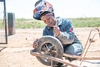
Mariam Sulaiman, in Kakuma, Kenya. Photo credit: ©UNHCR/Eric Bakuli
“One day I realized if I can train young girls like me, they can’t get married or get pregnant at a young age if they have their source of income,” she says. “Welding is the way of helping them being self-reliant.”
She wants the workshop to grow into a larger training platform for young women in Kakuma and beyond. She wants to teach better, manage better and reach more girls who need the kind of opportunity she once needed.
“I have the potential to share my skills,” she says. “I want to share with other girls out there. I don’t want them to struggle the way I struggled. I want to provide good quality welding education in Kakuma, even outside of Kakuma.”
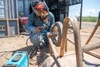
Mariam Sulaiman, in Kakuma, Kenya. Photo credit: ©UNHCR/Eric Bakuli
Pang: Putting Skills Into Service
Pang Ismail Hamiz first came to Kakuma as a child after her family fled conflict in Sudan’s Nuba Mountains. Years later, she returned to Sudan to study. When war broke out again in 2023, she fled a second time, carrying the papers that proved what she had worked for.
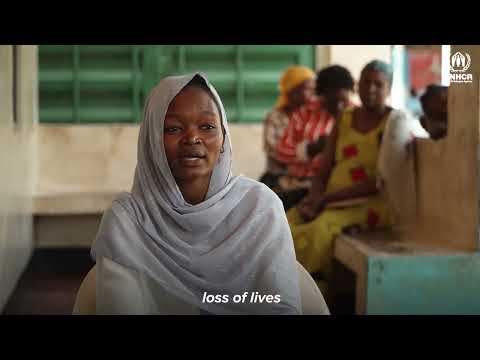
“My people have been suffering for the longest,” she says. “And with war comes loss, loss of property, loss of lives and loss of education.”
Back home, Pang first wanted to study medicine, then found physiotherapy. The field made sense to her because it helps people manage pain, recover movement and rebuild strength after injury, illness or trauma.
In April 2023, Pang was working in a hospital during her attachment when fighting broke out.
“We just started hearing bombs, gunshots and people screaming and running,” she says.
She was alone in Sudan. Her family was in Kakuma. Roads and bridges were blocked. When she finally reached the house where she had been staying, she knew she could not carry much.
“I just looked for my certificates, my papers,” Pang says. “I took a backpack and that’s the only thing I fled with.”
Back in Kakuma, Pang began using her training to support people affected by displacement. She now works as a community rehabilitation officer, helping people with disabilities and others who need physical rehabilitation.
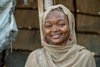
Pang Ismail, in Kakuma, Kenya. Photo credit: ©UNHCR/Eric Bakuli
“Although I’m not helping the people in my country as I had planned, still I’m doing that here directly to other people who are refugees and have fled their countries,” she says.
Pang wants to open a physical therapy clinic in Kakuma, where the need is significant and services are limited.
“Kakuma is a very big camp,” she says. “There are a lot of people and one organisation cannot serve all of these people.”
Alongside her rehabilitation work, Pang is also a filmmaker and content creator. She is the founder and managing director of the Kamp, a refugee-led media production company based in Kakuma.
“The idea of me just sitting around not doing anything just didn’t feel right,” she says. “So I felt like I had to do something. That’s how I started mobilizing some of the talents around Kakuma.”
Through the Kamp, Pang and her team create audiovisual stories, document community initiatives and work with other organizations to show what people in Kakuma are doing.
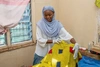
Pang Ismail, in Kakuma, Kenya. Photo credit: ©UNHCR/Eric Bakuli
“Refugees are capable individuals,” Pang says. “They’re skilled, they’re educated, they’re peaceful.”
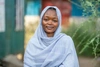
Pang Ismail, in Kakuma, Kenya. Photo credit: ©UNHCR/Eric Bakuli
Her vision is to grow the Kamp into a larger film or communications company, with stronger production capacity, more trained young people and more opportunities for refugees to tell their own stories.
Monica: Farming As A Way Back To Work
Monica Jackson is from South Sudan. She fled conflict and now lives in Dadaab, where she works in insect farming, keeps poultry and grows crops alongside other women.
Conflict shaped much of Monica’s early life. When she reached Kenya, one of the first changes she felt was the ability to sleep without gunfire.
“At least now I’m okay because I can sleep peaceful,” she says. “There is no gun shoot.”
Safety did not automatically mean stability. Monica had children to feed and no easy way to earn. She looked for any work that could help her support them.
“I asked if there was something I could do. washing clothes, washing plates, anything so that I could be paid and feed my kids,” she says.
Then she saw women working in insect farming and poultry production.
“Because back home I was a farmer, I can farm,” Monica says. “When I saw them I was very happy.”
She asked to join and was accepted. The work felt familiar, even in a new country and setting. It also gave her a community of women working toward the same goal.
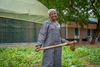
Monica Jackson, in Kakuma, Kenya. Photo credit: ©UNHCR/Mohamed Maalim.
“I’m very happy because I’m able to support my family, my three kids and my husband,” she says. “If there is no employment, we can do farming so that we can help our people.”
Her daily work includes harvesting eggs, collecting larvae, washing and drying them, and tending the farm. It is labour, but it is also time spent with women who understand the pressure of starting again.
“When women, they come together, you know us women, we have a lot of stress,” Monica says. “When we are together, we discuss, we laugh, we eat together.”
The project is helping Monica’s family, and she sees how much more it could do. The group wants to find markets, sell what they produce, expand the farm and bring more women into the work.
“We are still looking for market because we don’t have a market where we can sell our things,” Monica says. “We are searching for market so that when we are producing our things, we can get something to bring more other people who are not doing anything.”
For Monica, access means markets, supplies, travel, networks and the ability to connect with people outside Dadaab. It also means the chance to grow a project that is already working.
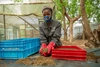
Monica Jackson, in Kakuma, Kenya. Photo credit: ©UNHCR/Mohamed Maalim.
“If we get the right access, this project is going to expand,” she says, “so that other women can join also and work so that they can help their families.”
Her vision is grounded in what she has seen: women who work together can support their households, share knowledge, reduce stress and create income even in difficult conditions.
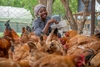
Monica Jackson, in Kakuma, Kenya. Photo credit: ©UNHCR/Mohamed Maalim.
From Experience To Exchange
On 20 June, World Refugee Day, Mariam, Pang and Monica will join 30 young refugee women from across Kenya for the Exchange Hub, an initiative under the UNHCR–Mastercard Foundation partnership, convened by UNHCR with the Women on Boards Network Kenya.
The day will bring young refugee women from Nairobi, Kakuma and Dadaab into direct exchange with Kenyan women leaders, private sector actors and partners. Together, they will share experiences, discuss what refugee women are building, and identify the support, guidance and connections that can help advance their ambitions.
The Exchange Hub also marks the beginning of a mentorship platform under the UNHCR–Mastercard Foundation partnership in Kenya, connecting young refugee women with women leaders beyond the day itself. It is a step toward women supporting women with time, experience, honest advice, useful networks and belief in what another woman is trying to build.
Watch: What She Builds: Young Refugee Women Building Futures In Kenya
This article was first published on the UNHCR website. (opens in a new tab)