
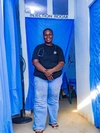
One night in 2022, Victoria found herself frantically driving through the dark, unpaved streets of Juba’s Gurei neighborhood, a sprawling and rapidly growing residential area about 15km outside the city centre. A close friend was dangerously ill, and every single local clinic she knocked on was locked tight. It took an hour of panicked searching to reach a hospital in central Juba, to finally get treatment. For Victoria, a trained medical professional, the terrifying journey exposed a reality she couldn't unsee: her rapidly growing community was entirely stranded when it came to healthcare.
"It became clear to me," she reflects, "that it was my responsibility to open a facility to help the people of Gurei."
So, Victoria did what most doctors and nurses wouldn't dare to do. She walked away from the comfort of a major hospital, turning her back on a guaranteed monthly salary and established corporate systems, to build a clinic from scratch right inside her own neighborhood.
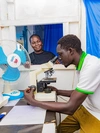
Four years later, that leap of faith has transformed Gurei. Victoria is no longer just a medic; she is a local employer. She has built a dedicated team of six people, pulling local nurses, laboratory technicians, and support staff into stable jobs. Together, they run a full-scale operation—managing everything from daily outpatient consultations and a stocked pharmacy to lab diagnostics and overnight patient admissions.

On any given morning, Victoria looks out at a waiting room that reflects the complex reality of modern South Sudan. Her patients are long-term Gurei residents, families returning home to rebuild, and forcibly displaced people fleeing conflict and climate flooding from the north. They come to her because healthcare cannot wait for formal systems to catch up.
But passion alone doesn't pay for medical inventory. To keep her doors open, Victoria had to learn to think like a CEO. She partnered with Inkomoko, diving into business training and financial advisory sessions to master the mechanics of cash flow and record-keeping. Armed with tailored financing, she took total control of her supply chain—expanding the range of life-saving medicines she could stock and building the tight operational systems needed to scale.
Victoria didn't just fill a medical services gap; she proved that a functional, sustainable healthcare market could exist where others only saw risk. And across every booming, underserved urban area in South Sudan, the blueprint she created is exactly where the future of commercial opportunity lies.
South Sudan's cities are absorbing population growth at a rate that most investors haven't factored in. World Bank data puts urban population growth in at close to 5.8% annually - one of the faster rates on the continent.
The pressure on cities like Juba has intensified further since the war in Sudan began. More than one million people (opens in a new tab) have crossed into South Sudan since April 2023, a mix of forcibly displaced people from Sudan and South Sudanese nationals returning home. They are concentrating in and around urban centres where services, work, and relative safety are within reach.
In healthcare, demand is urgent because people cannot wait for formal systems to catch up. Healthcare is not discretionary. People with children, people with chronic illness, people working in markets and on building sites do not defer medical care indefinitely. Right now, in many of Juba's expanding neighbourhoods, what's available is thin. The addressable market for clinical services, diagnostics, maternal care, pharmacy, and emergency treatment is underprovided and growing.
Victoria's clinic isn't filling a gap left by a slow government — she’s operating in a market that didn't have a functioning supplier. That distinction matters commercially.
Financing
Most small healthcare enterprises in South Sudan can't access credit on terms that reflect their actual risk profile. Tailored SME lending products, including short-term working capital loans and equipment financing, represent an underserved but growing opportunity. Businesses like Victoria's are often considered too risky because they lack formal records, collateral, or borrowing histories. Yet this is precisely where enterprise development organisations can play a market-building role. Through business training, one-on-one advisory support, financial literacy, and tailored financing, Inkomoko works with entrepreneurs to strengthen record-keeping, improve financial management, and build repayment histories. These interventions help de-risk businesses over time and create a stronger pipeline of investment-ready enterprises.
The opportunity for banks, microfinance institutions, and impact investors is not to start from scratch. The groundwork is already being laid. As entrepreneurs build stronger financial records and demonstrate repayment capacity, the risk profile becomes clearer and more manageable for commercial lenders.
Access to finance is not just a growth lever for businesses like Victoria's. It determines whether essential services remain available in communities where alternatives are limited. Every clinic that expands its inventory, hires additional staff, or purchases new equipment improves healthcare access while strengthening a growing local business.
The businesses exist. The demand is real. Increasingly, the investment case is being proven. The next step is for more financial institutions to enter the market.

Equipment and diagnostics: Laboratory and diagnostic capacity in urban community clinics is low. Medical equipment manufacturers and suppliers who offer leasing models, maintenance support, and technical training rather than straight sales will find more takers and longer customer relationships than those who don't.
Pharmaceuticals and logistics: Drug supply chains reaching Juba's secondary neighbourhoods are patchy. Distributors who invest in Go-To-Market logistics and partner with existing local clinics, to ensure goods like medicine reach smaller areas outside of the large city centres, will own the route relationships when the market matures.
Telecoms and digital health: Patient communication, appointment systems, and health records are paper-based or absent in most community clinics. There is a ready market for low-cost, mobile-first digital tools that work in low-bandwidth environments.
Insurance: Affordable health cover products for urban workers and their families are largely absent. The customer base is growing. The product doesn't yet exist at the right price point.
Victoria's clinic is already the infrastructure in Gurei. Six staff. Five service lines. A patient base that crosses community lines. The private sector has an opening: build around businesses like hers before the market is already claimed.

This story was first published on the Inkomoko website.
World Refugee Day
This World Refugee Day, we celebrate the contributions and talent of refugees and displaced youth across the continent.